Use
In terms of what forms and conventions we ‘used’ implies that we followed strictly the typical traits of previous real media products in the generic focused aspects. Certain conventions must be followed – especially if this is perhaps in regards to aiding to create verisimilitude of setting / location with all its combining features to make it successful or true to reality. Below is what traditional typical traits were of the superhero, psychological thriller and action-adventure genres consist of which we followed…
An integral part of postmodernism is its focus on narrative, it does not follow necessarily the systematic order of the start of “chain of events in a cause-effect relationship occurring in time” outlined by Boardwell and Thompson. This coincides with Todorov’s theory which would generally see the start in which there is equilibrium. Postmodernism is about challenging all levels of conventions – most particularly with narrative and so we had to have an anachronic structure to meet the characteristics of postmodernism often being unfaithful to the idea of a grand narrative. To break away from this grand narrative we followed the same idea of Inception in which both the film and trailer start amidst the disequilibrium of Dom Cobb the protagonist lying in the sand awakening from unconscious on the beach. The audience do not know he got there and can only anticipate that there will be a flashback as at that moment in time they are disorientated and befuddled to how he has go there. This is key in highlighting the concept of ‘there is no truth’ especially with the ending of the film ending not knowing if he is still in a dream or not meaning that restoration of equilibrium might not of been gained and so the ending is not the same as other films that have a definite ending. Thus we instigated the use to of starting in the disequilibrium of Clary being within a mental institution where she too as well as the audience unbeknown to her and them how she got there or what is reality or wrong. This idea of amnesia was greatly influenced by the involvement of the works of Christopher Nolan with ‘Memento’ who’s heroine suffers from amnesia and cannot make any new memories for forgetting the day before. In both these real text examples the trailers follow no order. Our ‘The Suppressed’ trailer too consistently throughout the trailer does not show any series of events to follow a catalyst as Bordwell and Thompson had outlined, especially with the long shot jump cut corridor scene that bounces back each time following a couple of different shots meaning we are using the conventions of postmodernism.
STRUCTURE

cOSTUME
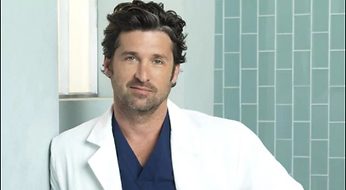
For some characters such as Dr Corvus and Nurse Vovin we strategically created them to be representative of their typical stereotype. Costume and Make-up research re-affirmed already known knowledge that the conventional attire for these characters as defined in ‘The Choice,’ TV shows ‘Scrubs’ and ‘Greys Anatomy’ which I referred to was that nurses wear blue scrubs and doctor’s a white lab coat, smart black trousers and a white shirt. To combine with the costume additional props such as the stethoscope further added to this aesthetic look. This meant that we would therefore authenticate the location of the medical room within the institution and allow the audience to easily deduce the point of the narrative due to the setting which has been created. We further build on this to develop the costume in editing which is explained on ‘developed.’ It was important to make this direct link to these characters as it was to offer a negative reading to challenge the representation of usual beloved and respected people, such contradictory reading of the typical one is to align ourselves with postmodernism in which ‘there is no truth’ and that “identities are not given but are constructed and negotiated.”
Lighting
When it comes to mise-en scene, I located that lighting is an important component of visual design in research, with the purpose to give clarity of image so that the audience may distinguish what are the important elements in the frame and creating verisimilitude so that the scheme of ‘effects lighting’ would appear that lighting came from sources within the fictional world. The main role is also to create atmosphere or emotional effect. In the research of postmodern trailers and my lighting research I needed to establish what types of lighting was used by producers in superheroes as I established whilst watching these trailers they were able to accomplish to make the audience believe what lay before their eyes was real.
Graveyard scene
The graveyard scene is a future event in our trailer ‘the Suppressed’ following the escape of Clary from the mental institution. Our protagonist has just learnt of her sister’s death and hence has gone to visit her grave. Across DC superhero films in particular I could see the link of the utilisation of the exploitation of low key lighting as a convention of lighting for these scenes to express the consummation of the dark, mirroring the clouding of death itself while underlining the negative connotation of fear. For example, Batman v Superman is a prime example of using this technique. Such lighting in this cinematography production elevated the suspense for audience and portrayed the emotions of Bruce Wayne’s younger self as distraught and foreshadowed his future by showing his tainted by darkness, the association of this therefore perpetuates a future crowded by sorrow and violence / anger.
London scene
The main convention of lighting for the superhero genre is ambient lighting. One of the things that compelled Zoe and I to do a superhero genre was the ability of postmodern features of magic and supernatural abilities to be so believable when watching productions in today's film industry. This was when I noticed that the suspension of disbelief was owed to the lighting of ambiance. It was Capt. America Civil War that enlightened me with this when you see the clip of the superheroes in conflict, with Scarlett Witches computer generated imagery powers being depicted but believing every moment is true as you see it. The ambient lighting here created verisimilitude and explained that we needed to do this with elements our trailer, which we chose to be the Censor scenes that introduced the organisation to present it as being the truth of the narrative. Essentially what this type of lighting does is preventing our consumers from detaching themselves from the fictional world. By only using ambient lighting for the government scenes allowed the verisimilitude to project the mirror image of issues surrounding our world where targeting of prejudice and repression to minority groups who are feared or perhaps not understood.


Title
As our trailer predominantly superhero based we needed to achieve to continue the running motifs of all superhero films with often links to their origins as we discovered when producing the moodboard of the necessity of the bold colours of blue and yellow. Upon further analysis and research of titles of Marvel’s ‘Guardian’s of the Galaxy’ and ‘Spiderman Homecoming,’ Zoe saw the same recurrence of the two colours we had implemented in our mood board. This was seen across multiple marvel superhero comics and so we followed this colour scheme convention as the yellow and blue were contrasting colours that worked along with our narrative because of the connotations: of yellow offering warmth, something glorious and energy, meanwhile blue juxtaposes this due to it conveys coldness. This symbolism here strengthens this argument of how the Dunamis (the gifted people in our trailer) possess the ability to utilise the power to cause destruction and nothing good. This therefore mirrors the perspective of Censor, and highlights the same representation of all superhero films.
Location
In Zoe's initial research she cross referenced a wide range of the marvel universe films, and looked at the overarching themes of what locations seemed to be the most frequent ones, the most iconic settings she realised was cities, especially New York considering majority of Super hero films are produced by the 'Big Six' which is located bases are in America. The other option is London, like Dr Strange has London as one of the main locations as that is where the institute is. We therefore chose our base for Censor to be in location, also considering cities are known for their wealth which is needed to represent this for the organisation considering it is government run. Furthermore, where there is wealth - there is power which works to build the representation of these characters who are repressing these characters: hence giving them a greater negative representation.

Barthes code
Applying theories means that we are meeting the conventions as theorist’s arguments are drawing a link of the generic structure from the narrative of fictional productions. Interweaving the theorist of Barthes semantic code and symbolic code were significant in the success of our narrative.
The semantic code looks at the deeper additional meaning over the basic denotative meaning of the subject. This was one of the most important props for our trailer, in this scene that the prop is inclusive within is the meadow scene which we presented as a secure location where Clary's younger self would manipulate the movement of an object and show her sister. We ensured this sense of security by using a prop that could embody something natural to present this trusting location.
Here is where we used the semantic code and used Batman v Superman's opening scene prop utilisation (which I unearthed in Props Research) to our own advantageous aspect to change it to suit our own production. Batman v Superman used a dried autumn leaf, that was uncanny as it suggested death as it collaborated the location and setting of a funeral but from this we learnt how juxtaposing something such as a product of nature can present a certain atmosphere.
From this research of the use of codes and props here meant I understood that we needed to use instead of a dried leaf - a fresh leaf to connote purity. The code here directly controls the peoples belief of Clary's powers as it connotes life, rebirth, nature and linking to idea of heraldic meaning that represents happiness. By this we could set up a sense of equilibrium at this part of the trailer so that we could contradict footage that will be later shown, therefore to express the effects of Censor of her prior to her meeting.
Music and rock
There is forms and conventions for music for the genre of superhero movies in the film industry which I gathered as explained in the music research. Tied with this I saw when and how the music cue will change in regards to tempo and speed like in 'Thor Ragnorak's' trailer or changes completely as it does in 'Iron Man' to act as a glue the multiple shots together during montages and scenes so to help the consumers understand the narrative better. This was significantly substantial to having clarity within our trailer as due to our product being postmodern to the consumers eye it is jumping around a lot and would otherwise be unclear.
From foundation research of action adventure music in the trailer analyse that I compiled often the over arching motif was the dominant usage of classic genre music, however in more depth analyse I saw that the more postmodern superhero trailers saw the occurrence of rock music. We emulated the tracks of Thor Ragnorak's 'Immigrant' song by Led Zepplin and Iron Man's AC DC 'Back in Black.' Each of these non-diegetic soundtracks work along with the footage especially Immigrant song for its direct Norse mythological references to Vahalla and war, which features exactly what the film is based around meaning along with the lyrics the "We come from the land of the ice and snow" serves to make clear the geography and heritage of the characters such as Hela as well as give the setting of the film.
This indicator of setting and location by music we used especially in our trailer during the mental institution in which we used an

